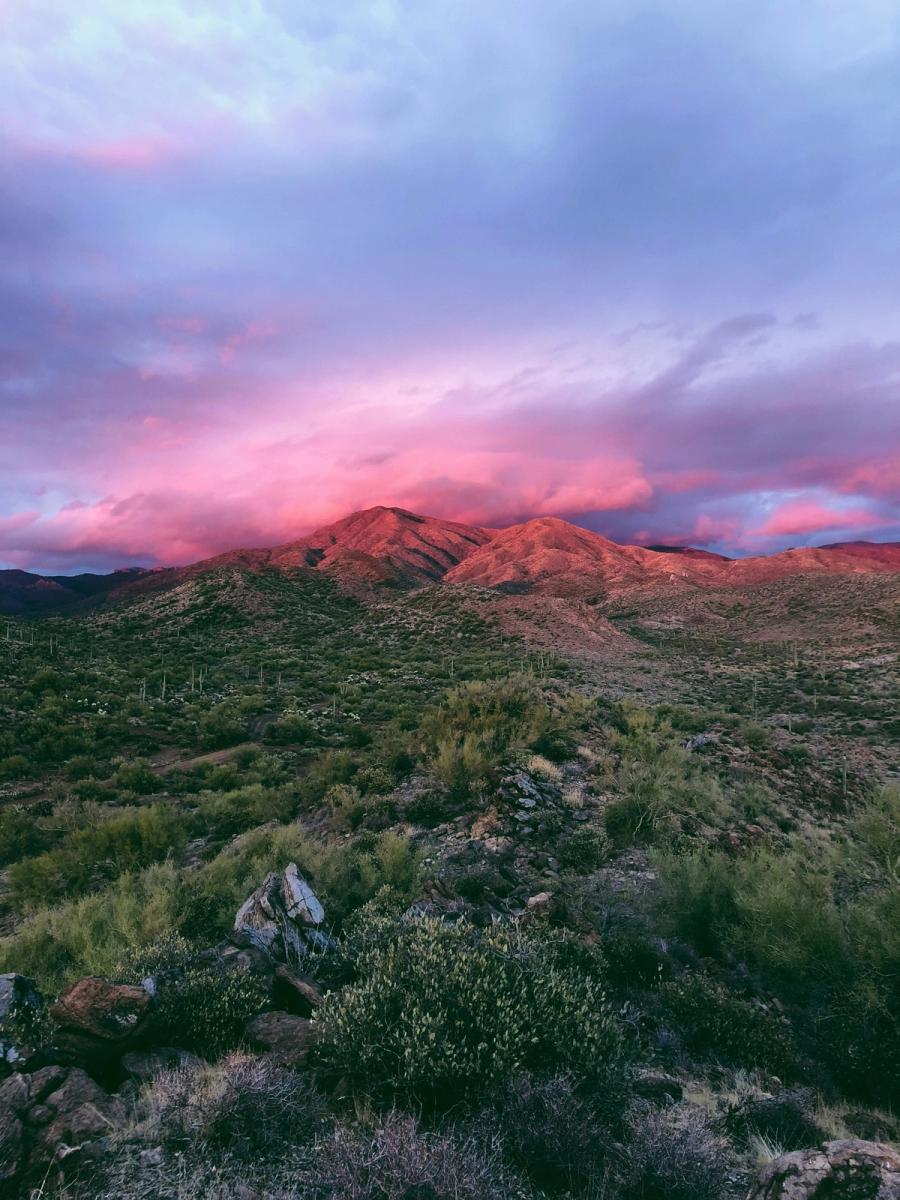
Some time ago in august, I took an evening stroll with a friend of mine at about 6pm. When I got to an open field, I saw the most beautiful painting of the sky I’ve ever seen. It had the best combination of the warm sunset colors, lovely sky blue and its shades, grey and silver like colors etc. This painting followed every rule of fine art I know. The best part was that it was not painted on any canvas. It was painted directly on the sky. Can you guess who the artist was? It was God!
For minutes, my friend and I paused to admire how beautiful the sky was. It was evident at this point that all creatives get their inspiration from God who is the first to ever create and is still in the business of creating
They understand that God is the first creative and we are created to create.
“In The Beginning God Created…”
There are days when creating feels beautiful. Ideas come easily, the work feels alive, and you remember why you started.
Then there are the other days.
The blank page feels too loud. Your work looks ordinary next to someone else’s. You wonder whether what you make really matters or whether God even cares about it.
Genesis 1 gives us a steady place to begin.
“In the beginning God created the heavens and the earth.” Genesis 1:1
The first thing Scripture shows us about God is that He creates.
Before there were songs, paintings, stories, brands, films, gardens, buildings, or books, there was God bringing something beautiful and ordered out of darkness and emptiness. He spoke light into being. He made land and sea, trees and stars, birds and people. And as He created, He called it good.
That is not a small detail. It tells us something about who God is and something about why creativity matters.
We create because we reflect a Creator
Genesis 1:26–27 tells us that human beings are made in God’s image. We cannot create something from nothing. But we have been given the ability to imagine, shape, build, write, design, sing, solve problems, and make meaning.
That desire to create is not accidental.
When you make something with care, you are reflecting part of the nature of the One who made you. Whether your work is a poem, a podcast, a business idea, a painting, a photograph, a website, or a meal prepared for people you love, it can carry the fingerprints of a creative God.
Psalm 19:1 says, “The heavens declare the glory of God.” Creation speaks. It points beyond itself. In the same way, our work can become a small witness to truth, beauty, goodness, and hope.
God cares about skill
Sometimes Christians talk about creativity as though passion is all that matters. But Scripture gives us a fuller picture.
In Exodus 31:1–5, God gives Bezalel the skill and ability to work as a craftsman for the tabernacle. He is not only called, he is equipped. God cares about the details: the materials, the design, the process, and the work of human hands.
That should encourage us to take our craft seriously.
Practice matters. Learning matters. Editing matters. Starting over matters. Excellence is not the same as perfectionism, but it does mean offering God our attention and effort.
Your creativity does not have to be rushed to be meaningful. It does not have to look like everyone else’s work to be valuable.
Your work does not need to “look Christian” to honor Christ
Christian creativity is not limited to work with a church logo, a worship lyric, or a Bible verse at the end.
Of course, those things can be beautiful and important. But God’s truth can also show up in a story that tells the truth about grief, a design that helps people find their way, a song that gives language to hope, or a business that treats people with dignity.
The question is not only, “Is this obviously Christian?”
A better question may be: “Am I making this with honesty, love, wisdom, and care for people?”
C. S. Lewis used stories and imagination to help readers encounter big questions about faith, courage, desire, and redemption. Dorothy L. Sayers wrote thoughtfully about the connection between human making and the image of God. They remind us that imagination is not a distraction from faith; it can be one of the ways faith comes alive.
Contemporary artist Makoto Fujimura also speaks about “culture care”—the idea that Christians can contribute beauty, healing, and generosity to the world around them. That is a helpful picture for creatives: we are not only producing content. We are helping shape the kind of culture people live in.

What about fear, comparison, and creative block?
Most creatives know the struggle.
We compare our beginning to someone else’s middle. We worry that our work is not original enough, good enough, profitable enough, or spiritual enough. Sometimes we are simply tired.
But the gospel gives us permission to create from a different place.
John 1 tells us that Jesus is the Word through whom all things were made. Colossians 1 says that all things hold together in Him. And Ephesians 2:10 reminds us that we are God’s workmanship, created in Christ Jesus for good works.
That means your identity is not hanging on your latest project.
You are loved before you produce anything. You belong to God on the days you feel inspired and on the days you cannot find the words. Your work may matter deeply, but it is not your savior.
You are loved before you produce anything. You belong to God on the days you feel inspired and on the days you cannot find the words. Your work may matter deeply, but it is not your savior. Draw your inspiration from God
So, make room for rest. Keep learning. Start small when you need to. Be faithful with what is in front of you.
Create with hope
The Bible does not end with God throwing away creation. It ends with creation being renewed. Revelation 21 gives us a picture of a restored world filled with God’s light, beauty, worship, and the glory of the nations.
Our work will not fix the world. Only God can do that.
But our work can point toward what is coming. It can offer a glimpse of beauty in a hard season. It can help someone feel seen. It can tell the truth. It can make space for wonder.
So create.
Create even when it feels small. Create even when nobody is watching. Create with open hands. Create because the God who made you is still making all things new.